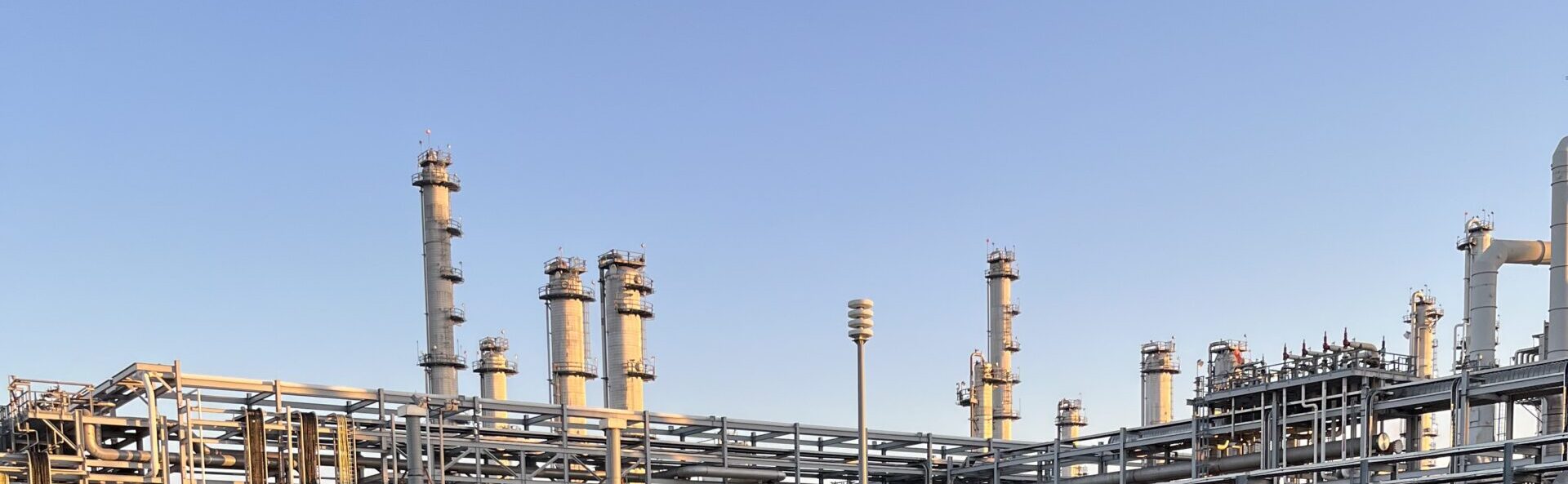

From Discrete Outputs to Flow-Based Value Creation
Introduction — A Shift in Perspective
Natural Gas Liquids (NGL) fractionation is commonly explained as a sequence of discrete separations: take in Y-grade and produce ethane, propane, isobutane, normal butane, and natural gasoline. That description is technically accurate, but it can unintentionally narrow operational thinking. When the process is framed only as a set of finished products, improvement efforts tend to focus on individual columns instead of the system as a whole.
A more effective perspective is to view fractionation as a continuous value stream. Instead of five separate outcomes, it becomes one flowing thermodynamic and human system where energy, mass, and decisions move together. Lean thinking pushes the question away from “Are we making product?” toward “Are we maintaining stable flow that naturally produces quality?”
Fractionation as Flow Rather Than Events
A fractionation train is not five independent plants. It is a single, interconnected chain of heat transfer, pressure control, and composition management. What happens in one tower inevitably affects the next. Reboiler duty changes vapor traffic downstream. Pressure adjustments alter relative volatility and tray efficiency. Feed composition swings ripple through the entire train, influencing condenser loads, reflux ratios, and product purities.
When the system is treated as discrete, each area tends to optimize locally. Operators focus on “their” column, and performance discussions revolve around isolated specifications. When treated as continuous, the emphasis shifts toward stability, predictability, and upstream causality. The goal becomes creating conditions where specifications are achieved as a natural consequence of steady flow rather than constant correction.
This difference in mindset changes how problems are diagnosed. Instead of asking why a single tower is off-spec, the question becomes where variation entered the system and how it propagated. Responsibility moves from ownership of equipment to stewardship of flow.
Continuous Improvement in a Sensitive System
Fractionation is uniquely suited to continuous improvement because small technical changes often produce outsized results. A minor pressure deviation can shift separation efficiency. Slight adjustments to reflux or reboiler duty can stabilize downstream columns. Feed characterization improvements can prevent hours of oscillation. These are not dramatic overhauls; they are incremental refinements that compound over time.
Continuous improvement in this environment is less about large capital projects and more about disciplined observation, experimentation, and learning. The system rewards attentiveness. Operators and engineers who treat each shift as an opportunity to reduce variation gradually build a more resilient and efficient plant.
Respect for People as a Technical Advantage
In high-energy process environments, respect for people is not merely cultural — it is operational. The individuals closest to the equipment often detect subtle changes before instrumentation alarms. A shift operator noticing an unusual temperature profile or a field technician hearing a change in pump tone can provide early warning that no dashboard will immediately reveal.
Respect manifests in practical ways: inviting operator input during troubleshooting, incorporating maintenance feedback into standard procedures, and ensuring that improvement discussions are collaborative rather than corrective. When people feel ownership of the process, they surface problems earlier and propose more practical solutions. The result is not just morale improvement but measurable process stability.
Plan-Do-Check-Act in Continuous Operations
The Plan-Do-Check-Act cycle aligns naturally with fractionation because the process itself is cyclical and iterative. Planning involves defining a hypothesis about a variable — for example, adjusting reflux ratios to handle heavier Y-grade swings. Doing is the controlled implementation of that change. Checking requires disciplined monitoring of temperatures, pressures, and product purities across the entire train rather than only the targeted column. Acting means standardizing successful adjustments or reverting and learning if the outcome was not beneficial.
The strength of this cycle lies in its repeatability. Over time, the organization builds a library of tested responses to common disturbances, reducing guesswork and increasing confidence during upsets.
5S and the Visibility of Work
In industrial settings, disorder often hides inefficiency. Physical organization of tools, clear labeling of valves and lines, and consistent housekeeping reduce cognitive load and response time. The same principle applies digitally and procedurally. When operating envelopes, startup procedures, and troubleshooting guides are buried in shared drives or outdated binders, standards effectively disappear.
Order is not cosmetic; it is functional. A well-organized control room, a clean analyzer shelter, or a clearly marked sample point shortens the distance between observation and action. This physical and informational clarity reduces variation by making the correct action easier to see and execute.
Visualization — Making Standards Obvious
Visualization transforms hidden standards into shared reality. Process flow diagrams posted in control rooms, live dashboards showing key performance indicators, and clearly displayed operating ranges shift knowledge from private memory to public reference. When everyone can see the same information, alignment improves and decision latency drops.
Visualization is especially powerful in continuous processes because it reinforces the concept of flow. Trends, energy balances, and composition profiles displayed in real time allow teams to see not just current conditions but directional movement. Instead of reacting to alarms, teams can respond to emerging patterns.
Conclusion — From Product Thinking to System Thinking
Viewing NGL fractionation as a continuous process rather than a series of discrete outputs changes both technical and cultural behavior. The plant becomes less about producing five separate streams and more about sustaining a stable, efficient flow of molecules, energy, and human judgment. Lean principles support this transformation by emphasizing incremental improvement, disciplined experimentation, organizational clarity, and respect for the people who interact with the system every day.
When standards are visible, workspaces are organized, and improvement cycles are habitual, fractionation shifts from reactive correction to proactive stability. The outcome is not only better product quality and throughput, but a plant culture that sees itself as a living system — continuously learning, continuously refining, and continuously flowing.