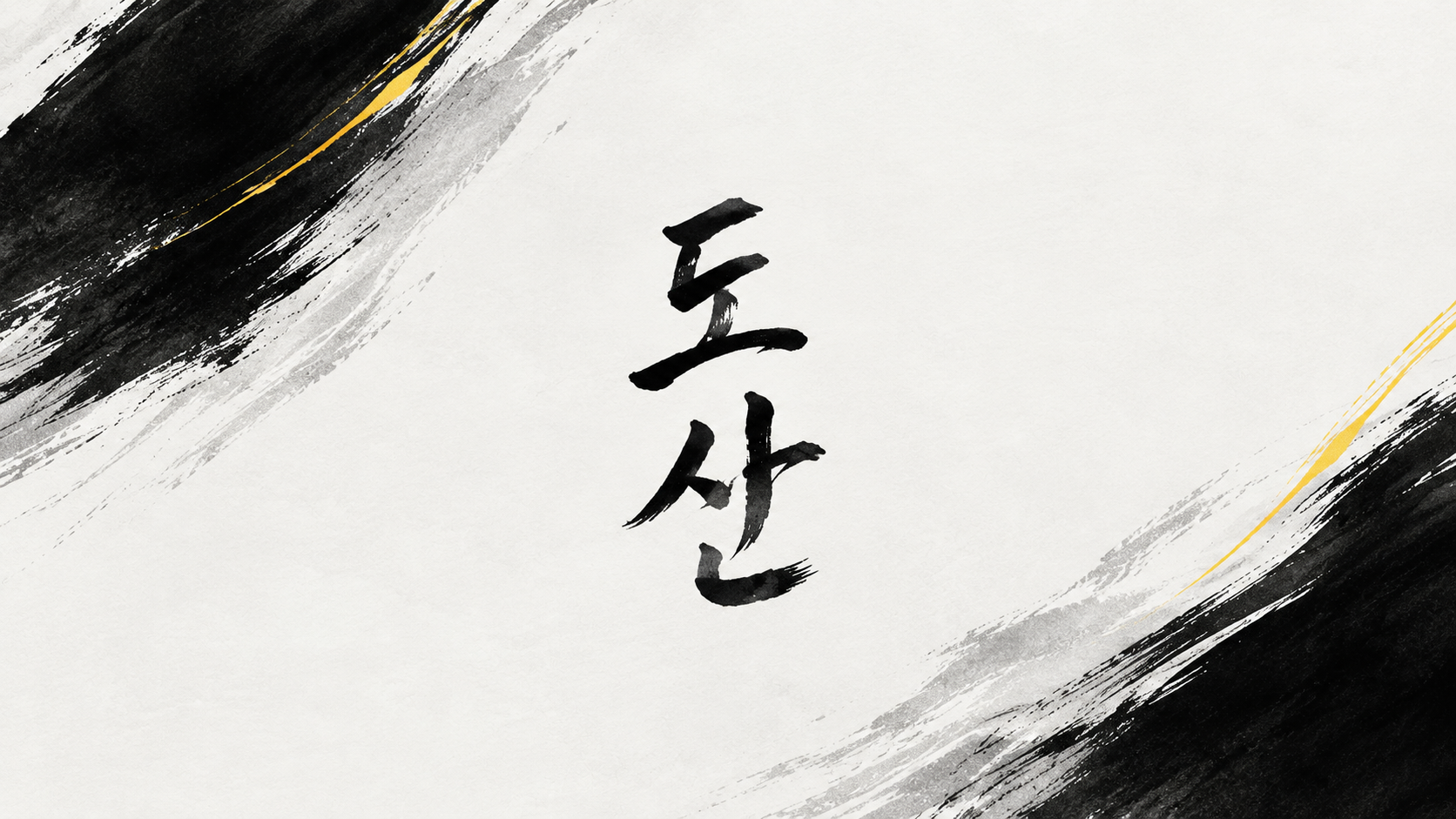

There is something fitting about learning a form after you thought you had already moved past it.
In my Taekwondo training, that form was Do-San.
Do-San is the seventh tul of the Chang Hon system and contains 24 movements. It is named for Ahn Chang-ho, the Korean independence activist and educator whose life was devoted to the development and liberation of Korea.
But for me, Do-San eventually came to represent something much more personal.
I skipped it.
At the time, my class was moving through the ranks, I was able to advance without formally learning Do-San (my dojang gave the opportunity to skip as an adult to move towards sparring classes). I continued progressing, learning the forms that came next and focusing on what was immediately in front of me.
Eventually, though, Do-San came back around.
I had to learn it.
And there was something almost humorous about the experience. I had moved forward without it, but I hadn’t actually escaped it. The form was still there, waiting for me.
You Can Skip a Lesson. You Can’t Always Skip Learning It.
That experience reminded me of something that applies far beyond martial arts.
We often think advancement means leaving things behind.
We graduate from school. We get promoted at work. We move to a new city. We enter a new relationship. We reach a new rank.
And sometimes we assume that because we have moved forward, the things we didn’t learn along the way no longer matter. But life has a funny way of bringing unfinished lessons back to us.
Sometimes the lesson returns as a problem. Sometimes it returns as a relationship. Sometimes it returns as a responsibility we aren’t prepared for. And sometimes, like Do-San, it simply returns as something we eventually have to learn.
There is an important distinction between skipping something and outgrowing something. They aren’t the same. If you genuinely outgrow something, you no longer need it. If you merely skip it, you may still need to come back.
Rank Doesn’t Mean Completion
One of the things I appreciate about traditional martial arts is that rank can eventually expose the difference between having progressed and having learned.
A belt tells you something about where you are in the curriculum. It doesn’t necessarily tell you that you have mastered everything that came before it.
You can advance while still having weaknesses. You can know advanced techniques while struggling with fundamentals. You can have a higher rank and still need to go back and work on something you should have learned years earlier. That’s not failure.
In fact, recognizing it may be part of maturity. The ego wants progression to be linear. It wants to believe that once we pass something, we are done with it. Training teaches something different. Sometimes progress looks like going backward.
Going Back Isn’t Going Backward
When I eventually learned Do-San, I wasn’t actually returning to where I had been.
I was approaching the form with more experience than I would have had when I was originally supposed to learn it.
That changed the experience. I understood movement differently. I had developed better awareness of my stances, balance, timing, chambering, and transitions. I could recognize things that probably would have gone unnoticed earlier.
So perhaps I hadn’t really missed Do-San. Perhaps I had simply postponed it. And there is a difference. Sometimes we have to return to old lessons because we are finally ready to understand them. This happens in martial arts all the time.
A technique that seemed pointless at one rank suddenly makes sense several years later. A basic movement becomes important once you understand the advanced technique built upon it. A form you once rushed through becomes meaningful when you finally understand what it is trying to teach.
The form hasn’t changed. You have.
The Lesson of Do-San
That’s what Do-San represents to me now. It reminds me that progress doesn’t erase gaps.
We can move ahead while leaving things unfinished. We can receive recognition while still having work to do. We can advance farther than we expected and still discover that something from an earlier part of the journey is waiting for us.
And when it is, there is no shame in going back. Learn it. Practice it. Get it right. Then continue.
The goal of martial arts isn’t simply to collect belts or get through the curriculum as quickly as possible. The deeper lesson is learning how to respond when we discover that we aren’t as complete as we thought we were.
Sometimes the most important step forward is a step back. For me, that step back was Do-San. I skipped the form. Eventually, I had to learn it anyway. And maybe that’s the point.
There are some things in life we can postpone, but very few things we can truly escape learning.