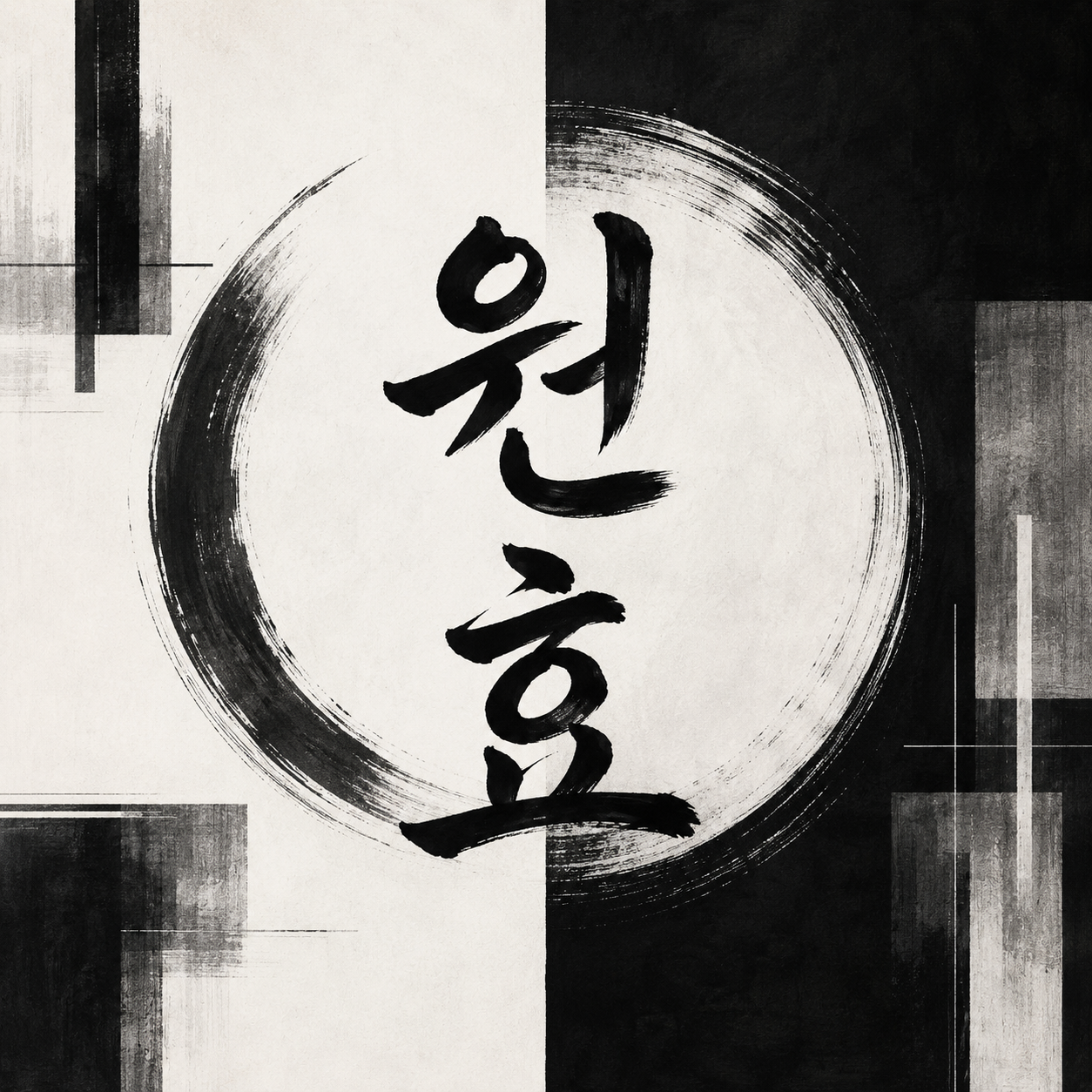

For many Taekwondo students, earning a green belt marks an important transition. The basics have become familiar, balance is improving, and movements begin to feel more natural. In the traditional Chang-Hon system, one of the defining milestones of this stage is learning Won-Hyo, a pattern that is often viewed simply as the next form to memorize. In reality, it represents something much deeper.
Practiced in the traditional non-sine-wave Chang-Hon style, Won-Hyo teaches precision, discipline, and intentional movement. It is not merely a sequence of techniques but a lesson in how martial arts—and life—are developed through steady refinement.
The pattern is named after the Korean monk Won-Hyo (617–686), one of the most influential scholars in Korean history. He devoted his life to making Buddhist teachings understandable and accessible to ordinary people rather than reserving knowledge for an elite few. His legacy was one of education, humility, and service. Rather than creating division, he sought understanding and unity.
That spirit remains relevant in martial arts today.
The Chang-Hon system, developed by Choi Hong Hi, assigned historical names to each pattern so students would remember that Taekwondo is not solely about physical ability. Every form carries a story intended to shape character alongside technique. Won-Hyo reminds practitioners that true mastery includes sharing knowledge, treating others with dignity, and remaining committed to lifelong learning.
In many traditional schools, Won-Hyo is taught using the older Chang-Hon method that predates the widespread adoption of the sine-wave motion. Instead of emphasizing pronounced vertical movement, practitioners strive for crisp techniques, stable posture, and controlled transitions. Power comes from proper body alignment, timing, balance, and decisive execution.
This approach reflects an important principle: excellence is rarely dramatic. It is built through countless small improvements performed consistently.
That idea should sound familiar to anyone who studies leadership or operational excellence.
Modern organizations often speak of continuous improvement, the belief that lasting success comes through ongoing refinement rather than occasional breakthroughs. Whether the term is kaizen, operational excellence, or simply learning from experience, the principle remains the same. Small improvements made every day eventually produce extraordinary results.
Won-Hyo embodies this philosophy.
No student performs the pattern perfectly on the first attempt. Stances may be too long or too short. Blocks may lack precision. Timing may feel rushed. An instructor offers correction, the student adjusts, and the pattern gradually becomes cleaner. The process repeats week after week.
Progress does not occur because mistakes disappear overnight. It occurs because the practitioner remains teachable.
This mindset extends beyond the dojang. Engineers improve processes. Operators refine procedures. Teachers strengthen lesson plans. Parents grow through experience. Leaders become more effective by learning from both success and failure.
Continuous improvement is ultimately an act of humility. It begins with acknowledging that there is always something more to learn.
Equally important is the principle of respect for people.
Respect in martial arts is often associated with bowing, addressing instructors properly, and observing etiquette. While those traditions matter, genuine respect runs much deeper. It means recognizing the inherent worth of every training partner regardless of rank or experience.
The senior student who patiently helps a beginner remember a stance demonstrates respect. The instructor who corrects errors without humiliation demonstrates respect. The beginner who listens carefully and practices diligently demonstrates respect for both the instructor and the art itself.
The historical Won-Hyo dedicated his life to making wisdom available to everyone, not only to those with privilege or status. That legacy reminds us that knowledge carries responsibility. As practitioners improve, they become responsible for helping others improve as well.
This mirrors one of the healthiest leadership philosophies found in modern organizations. Strong leaders do not create dependence; they develop people. They coach, teach, encourage, and remove obstacles so others can succeed. Improvement is not achieved at the expense of people but through investment in them.
Traditional Chang-Hon Taekwondo expresses this idea every time students line up according to rank. Higher rank carries greater responsibility, not greater importance. Advancement is measured not only by technical skill but also by integrity, humility, and service.
Practicing Won-Hyo in the traditional non-sine-wave manner reinforces these values through disciplined movement. The steady posture demands balance. Crisp execution demands focus. Controlled transitions demand patience. None of these qualities can be rushed.
The pattern becomes a reminder that mastery is not built from spectacular moments but from disciplined repetition guided by thoughtful instruction.
For American students, this lesson extends well beyond martial arts. Whether leading a manufacturing team, serving in the military, raising a family, or coaching youth sports, the same principles apply. Improve a little every day. Treat every person with dignity. Share what you have learned. Remain humble enough to keep learning yourself.
That may be the greatest lesson contained within Won-Hyo.
It is not simply a green belt form.
It is a practical model for lifelong growth, demonstrating that technical excellence and good character are inseparable. Every crisp technique reflects disciplined practice. Every correction accepted with humility reflects continuous improvement. Every act of encouragement toward another student reflects respect for people.
When practiced with that understanding, Won-Hyo becomes far more than a pattern to perform for promotion. It becomes a philosophy carried into everyday life.